Between Thought and Text
Understanding How Students Use AI Writing Tools in Academic Work
Year:
2025
Timeframe:
8 Weeks
Tools:
Figma · Miro · Qualtrics
Category:
UX Research · Human-AI Interaction · Cognitive Ergonomics

Overview
Understanding How Students Think, Write, and Learn with AI
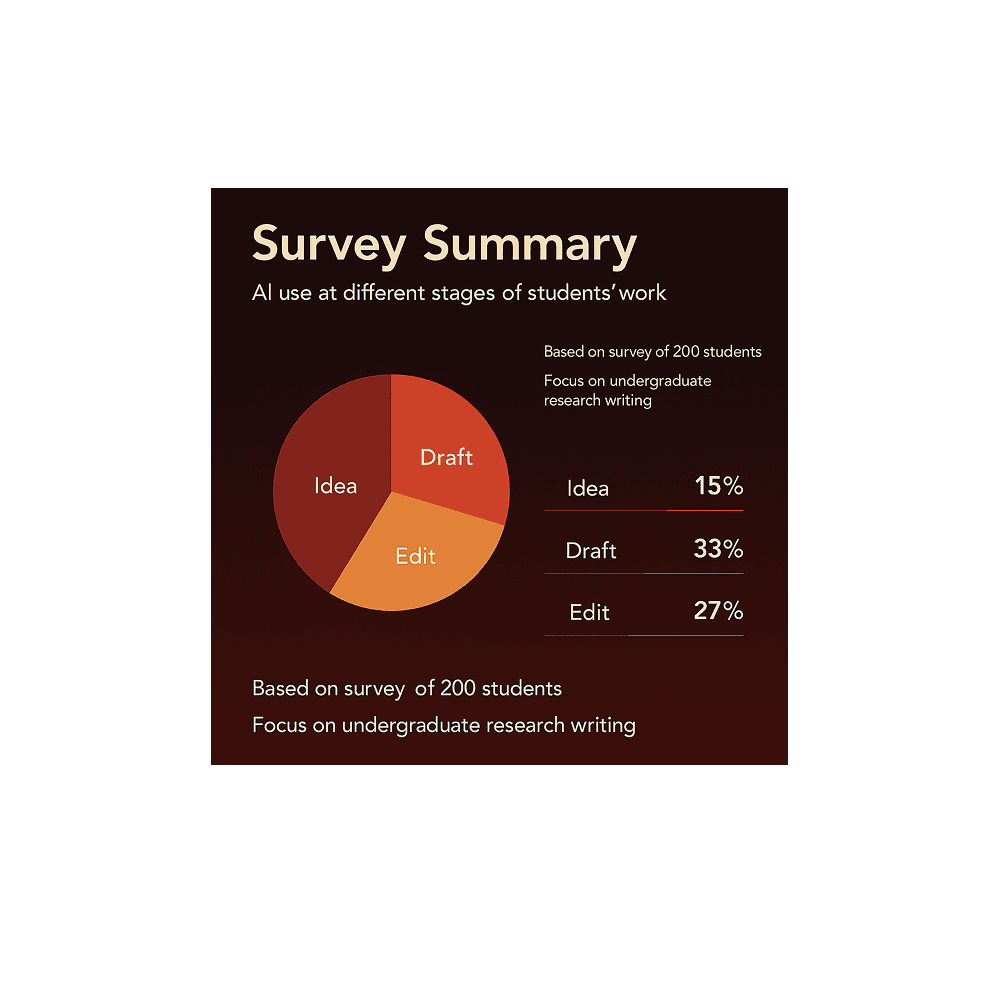
AI writing tools are reshaping academic work, offering support, speed, and structure, but also raising questions about authorship, comprehension, and cognitive depth. This study examined how undergraduate students integrate AI tools, such as ChatGPT, into their writing processes. Through surveys and in-depth interviews, we uncovered how students balance convenience against cognition, productivity against originality, and AI-assisted fluency against their own intellectual voice. The research revealed distinct mental models of AI support, ranging from grammar assistance to idea expansion, and highlighted how these patterns influence trust, cognitive load, and perceptions of agency. I led UX research planning, qualitative synthesis, and design implications for human-centered AI writing tools. Sai Thanmai Morramreddi contributed to data collection and early coding. Our insights informed design principles that support transparent, agency-driven human-AI collaboration, directly aligning with Google's vision for responsible AI.
Automation or Augmentation? The Ethical and Cognitive Tension
Students frequently rely on AI to brainstorm, polish, or rewrite text, yet many express unease about losing authorship, depth of thought, or critical engagement. The core challenge is understanding how AI shapes cognitive effort, trust, and perceived agency during writing. Our goal was to capture nuance in student decision-making: not whether they use AI, but how they think with it. The study emphasized the importance of comprehension, transparency, and preserving human intention within AI-assisted writing workflows.
Co-Authoring with Machines: Designing for Cognitive Agency
From our findings, we generated design principles for human-centered AI writing tools: - Editable suggestions rather than full rewrites - Confidence markers showing model certainty - Transparent “why this change?” explanations - Citation alerts for factual claims - Optional learning modes where the system explains revisions These concepts support writer agency, reduce over-reliance, and help students understand why AI makes certain recommendations, promoting thoughtful, not passive, co-authoring.